
HPSR Knowledge Platform
Health Policy & Systems Research (HPSR), is an emerging global field with its own evolving standards for creating, evaluating, and utilizing knowledge, and distinguished by a particular orientation towards influencing policy and wider action to strengthen health systems. It is widely recognized as a critical element of the action needed to achieve the health-focused Millennium Development Goals, strengthen primary health care, and advance towards Universal Health Coverage. The Alliance for Health Systems and Policy Research (ASHPR) at WHO has identified nodal institutes in several countries, housed in academic/research institutions which are critically engaged in Implementation Research (IR) and Health Policy & Systems Research (HPSR).A Nodal Institute serves as a resource for 7-10 academic/research institutions and decision-making bodies in its respective territory. The functions of the Nodal Institute include developing training programs for researchers, carrying out biannual mapping of health systems research and practice, collaborating with other IRP partners and initiatives, supporting scale up of effective interventions and promoting IR & HPSR..
India has a growing community of Health Policy & Systems Researchers with varied disciplinary antecedents in the social sciences and public health. Public Health Foundation of India (PHFI), is designated as the Nodal Institute for Health Policy and Systems Research for India by the AHPSR. As the Nodal Institute of the Alliance for Health Policy & Systems Research in India, PHFI has the mandate to support HPSR community and capacity development, extend collaborations with existing HPSR institutions and researchers and to facilitate the use of HPSR evidence by health system decision-makers in the country. PHFI, in partnership with premier HPSR organizations in India and inputs from other global leaders in the field, has contributed significantly to this mandate. So far the Nodal Institute has mapped national capacity for HPSR in India, held a series of interactions between researchers and policy makers, and initiated some critical dialogues with the health ministry towards realizing an institutionalized support environment for HPSR in India. It has convened as well as supported presence of Indian HPSR researchers in Global Health Systems Research Symposiums. It has also successfully launched a nationwide HPSR capacity building initiative “KEYSTONE” involving lead researchers and institutions involved in HPSR- 20 researchers identified through a rigorous selection process got trained under this initiative, by a group of faculty pooled from renowned HPSR institutions. It has facilitated involvement of several internationally known health systems and policy researchers and research initiatives for this process as well.
One of the mandates of the Nodal Institute project was to strengthen the existing networks and initiatives engaged in health systems research and dissemination of health systems knowledge. In this regard PHFI extended its support to Health Systems Research India Initiative (HSRII), for further strengthening its activities and initiatives. HSRII is one of the leading knowledge exchange platforms aimed at facilitating knowledge dissemination of health systems research as well as implementation research in India. Objective of this initiative is strengthening health systems through knowledge exchange and through implementing health systems initiatives in India. During the Third Health Systems Global Symposium held at Cape Town in 2014, HSRII received the first “Health Systems Global Social Media Award” for the best use of social media for informing, advocating and engaging for health systems. With the support of the Nodal Institute project, HSRII knowledge network is now being migrated into the current web based platform. The website based Knowledge Exchange Platform includes new initiatives such as (1) HPSR Blog, (2) HPSR Article-Watch, (3) HPSR News-Watch, (4) HPSR Event-Watch and (5) HPSR Newsletter; all these will facilitate optimum dissemination of health systems knowledge and strengthen the HPSR community interactions in the country.
In addition to its primary mandate of strengthening HPSR knowledge dissemination under this project, the HSRII has also provided data collection interface and technical assistance to the Nodal Institute team for conducting and managing the first National Survey of organizations engaged in HPSR – as a first survey of its kind in the country, this helped in identifying various issues and concerns related to HPSR capacities in the country.
We will be happy to have your valuable feedbacks on the newly built up web interface and its utility. Our sincere thanks to the AHPSR Nodal Institute team at PHFI, for their support to make this happen.
Latest Updates
Article Watch, Event Watch, Blogs etcCentral scheme of free drugs gets a quiet burial
It was in 2012 that the Centre first promised to provide free drugs in public health facilities. The first budgetary provision was made in 2013. Last year, the promise was crystallized to providing 348 essential drugs free. This was later whittled down to just 50...
Parliamentary panel parroted tobacco industry’s words
Barely days after the cancellation of the April 1 deadline for tobacco firms to stamp health warnings over 85% of cigarette packs, the Associated Chambers of Commerce of India (ASSOCHAM) came out firmly in support of the parliamentarian who headed the committee which...
Conflict of interest: Venkaiah Naidu frowns, so does tobacco panel
Amid the controversy over the BJP’s Lok Sabha MP from Allahabad Shyama Charan Gupta, Parliamentary Affairs Minister M Venkaiah Naidu said on Monday that it was expected that conflicts of interest are declared in accordance with rules. Gupta, a member of the Committee...
RTI overrides privacy norms of MCI in patients records: Central Information Commission
The provisions of Medical Council of India to protect confidentiality in patients' records cannot override statutes of Right to Information Act, Central Information Commission has held.Information Commissioner Sridhar Acharyulu held that after RTI Act has come into...
T N Ninan: Don’t subsidise, build
Most relatively well-off Indians have got used to the idea of taking out medical insurance policies in order to take care of possible health episodes. It has been a rapidly growing business, doubling in four or five years. The annual insurance premium was estimated...
Concern over private sector tilt in India’s new health policy
The Indian Government's draft national health policy, which many experts view as a step away from universal health coverage, is out for public consultation. Dinesh C Sharma reports.The much-awaited health policy of India's right-wing Government, which took office in...
A nationwide capacity building in HPSR
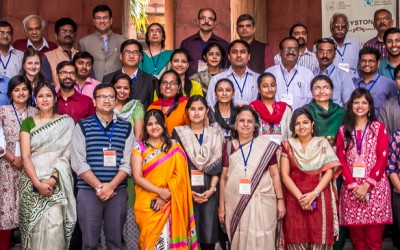
KEYSTONE is a collective initiative of several Indian health policy and systems research (HPSR) organizations to strengthen national capacity in HPSR towards addressing critical needs of health systems and policy development. KEYSTONE is convened by the Public Health...
Posting and transfer holds clues to the health of health services
By Kabir Sheikh A contract health worker is posted in a remote health post, 700 km away from where his spouse and children live. He sees them once a year, using up most of his annual leave of 18 days, in travel. He has been applying unsuccessfully to be posted closer...
Tackling sexual violence in India
By Jacqueline Bhaba, Professor of the Practice of Health and Human Rights, Harvard School of Public Health I read Sharma et al.’s recent paper ‘Sexual violence in India: addressing gaps between policy and implementation’ with interest. The death of “Nirbhaya”, the...
Antenatal care in India: what’s missing?
By Sanghita Bhattacharyya From conception through to birth, a child’s health is very closely linked to its mother’s. The pre-delivery phase is a particularly important stage in the continuum of care. Good information and care during the antenatal period links the...